Contents
That agentic AI earns its keep only when it touches real workflows — and that the hardest problems are trust, accountability and governance
- The models
There is hardly a boardroom anywhere that does not discuss AI agents every week. Yet, as moderator Fabian Teja Boegershausen, Country Director for Malaysia and Brunei at Agoda, put it at the outset, companies differ sharply in what they think "agentic" means, how they build it, and where it has actually worked.

Fabian Teja Boegershausen
Country Director Malaysia & Brunei, Agoda
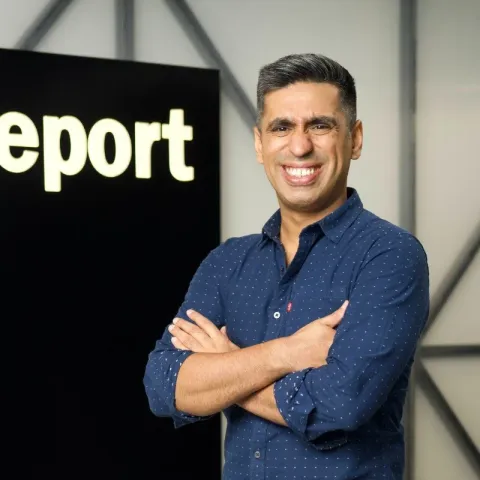
Milan Dhingra
Chief Product and Technology Officer, Teleport
Freddy Loo
Head of AI, Pos Malaysia Berhad
Tristan Eljed
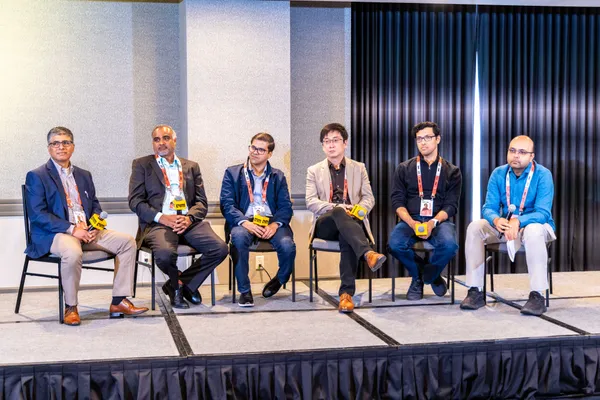
Head of Data & AI Enablement, SEEKHis panel brought together four practitioners from very different industries: Milan Dhingra, Chief Product and Technology Officer at Teleport; Freddy Loo, Head of AI at Pos Malaysia Berhad; Tristan Eljed, Head of Data & AI Enablement at SEEK; and Ana Anastasia Litovchenko, Head of AI Strategy & Enablement at Xsolla. What emerged was less a celebration of autonomy than a sober account of what it takes to move agents from slideware into production.
The tone was set early. Dhingra said that if agentic AI does not improve orchestration, visibility or intelligence in Teleport's operations, it is "just a toy." Loo relayed his boss's brief even more bluntly: find new money or cut costs, because shiny AI problems have no place on the books.
From single tasks to systems that decide
Eljed offered a working distinction. An AI agent, he said, handles a single task with a single outcome, such as helping a recruiter screen CVs. An agentic system strings decisions and workflows together: it plans, reasons and anticipates next steps based on feedback. That is where complexity, and the need for governance, comes in — though a human still makes the final call.
Partner with The CIO Room
Reach the leaders this piece is about
Four or five partners per room, alongside 50–100 CIOs and enterprise AI leaders. Tell us who you want to meet.
Teleport's first production case shows what that looks like on the ground. The company, Southeast Asia's largest e-commerce logistics specialist, ships parcels in the spare belly capacity of passenger aircraft across AirAsia and around 50 other airline partners. Every parcel must be screened against IATA rules for dangerous goods, because the cargo flies with passengers.
Conventional airport scanners are deliberately conservative, and Dhingra said 70 to 75% of their flags turn out to be false positives. Each one means an operator opens a bag, inspects the parcel by hand and repacks it — costing time, money and delivery deadlines.
Teleport built a retrieval-augmented system with a semantic layer grounded in IATA's dangerous-goods guidelines and its own internal feedback loops. It reads often misclassified marketplace product data, assigns the correct commodity code and flags genuine risks. The result, Dhingra said, is up to a 75% reduction in false positives, faster airport clearance and a better chance of meeting the delivery promises platforms make to shoppers.
Feedback loops, and the customer who wants to watch
Decisions are only as good as the feedback behind them, and Eljed argued every AI system needs two kinds. User feedback asks whether a recommendation or search result was actually useful. Operational feedback asks whether the system is high quality, fair and serving business outcomes.
That second loop, he said, becomes the governance metric
- Just a product metric
Litovchenko brought the customer's view. Xsolla, which builds payment and commerce tools for game developers worldwide, has spent about two years replacing chatbots with customer-facing agents. Its starting hypothesis was that fewer steps — ideally one — would delight users.
The lesson was the opposite. People want to trust the agent, and to trust it they want to see and steer the flow: what the agent is doing, how long they will wait, whether their refund is actually being processed. The job, she said, is not only to predict the user's next step but to answer what is on their mind while the work happens, and then deliver the outcome.
When the agent gets it wrong
Boegershausen put the hard question to Loo: when an agent makes a mistake at an organisation as public as Pos Malaysia, who owns it? Loo, eight weeks into the job, admitted Pos is early in its agentic journey, and that his reflexive answer — the business — did not survive a conversation with his boss.
He reasoned by analogy to an employee. A bad decision usually means someone was given a task they were not trained for, authority they should not have had, or the wrong information. Trace those back and responsibility may sit with whoever granted the agent its rights, not with the business user. Pos's working answer is explainability and traceability of every decision, with oversight shared between the business, the AI team and IT.
An audience member from the telecoms industry raised a problem from the other direction. After posting a data analyst role on SEEK and receiving more than a thousand applications, his first three interviews were with candidates whose AI-tailored CVs matched the job perfectly but who were not suited to it.
Eljed said he has faced the same problem in his own hiring for months. Some candidates now send AI avatars to interviews that answer on their behalf. SEEK's stance, he said, is that AI should surface the best matches and cut repetitive work, but the final decision stays human — and face-to-face judgment still catches red flags machines miss.
A boring skeleton, a vertical edge
Is there a universal playbook for deploying agents? Dhingra said no — but there is a universal skeleton, and it is deliberately boring: guardrails, governance, data foundations, human feedback and observability across every deployed agent. The same discipline applied to RPA and blockchain before it.
The real value, he argued, comes from going deep into a vertical. For Teleport that means turning unstructured operational data and context into structured data and context. Once that is done, agent outputs become more real-world, more transformative and more trustworthy.
Loo described an agent to his 80-year-old mother as a highly intelligent four-year-old with a sponge-like brain and the autonomy to act — which is why governance matters. He also cautioned that not every problem is an agent problem; most have been solved somewhere already. Pos used an agent to catch medical-claim anomalies, such as one person visiting several clinics in a week with family members. Rules and RPA could have done it, but the agent cut build cost and time to market, delivering savings within a couple of months.
Asked what will be unrecognisable by 2030, Litovchenko pointed to a metric Xsolla's board is now discussing: decision-making throughput. Xsolla runs a company-wide AI foundation with vertical plug-ins for each business branch. As agents take on execution, she expects growth to hinge on how quickly and how well leaders decide on priorities, risk, people and reputation — the part that will remain human. Xsolla plans to start experimenting with ways to measure it next year.
Buying time, honestly
The sharpest moment came from the floor. One audience member asked Loo what Pos Malaysia's right to win is against J&T, Ninja Van and the in-house logistics arms of Shopee and Lazada — rivals built without legacy networks or regulatory baggage. Will AI close the gap, or just buy time?
Loo joked that the question might cost him his job, then answered candidly. Domestic parcels are cutthroat, Pos carries a legacy network and regulatory limits, and AI alone will not change that. His plan is to bank unglamorous wins — medical claims, fuel efficiency across a large fleet — that prove AI can return real money. That proof matters: no initiative gets past the board without it, at a time when most AI pilots never reach production.
Those wins, he said, are table chips. They fund the capabilities needed for the real prize, a new operating model: customer service rebuilt around AI, an AI-enabled sales organisation, and a leaner, more nimble Pos. "Whatever that we're doing right now really is to buy time," he conceded.
That candour captured the panel's broader message. Across logistics, recruitment, gaming and travel, the leaders on stage were not selling autonomy. They were describing disciplined work: picking problems with money attached, building feedback and governance in from day one, keeping humans in charge of judgment, and earning trust one workflow at a time.
Compare this with our AI conference for CIOs.