Contents
Most AI investments that fail were never truly committed to in the first place. That was the sharpest message from a panel of three senior technology leaders who came together to discuss a question every boardroom is now asking: is our AI spend actually paying off?
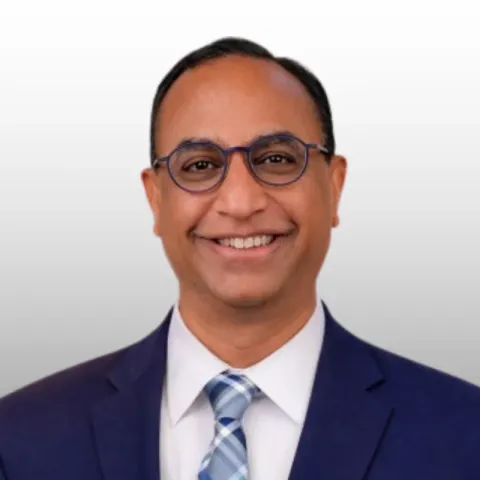
The panel brought together three very different vantage points. Vikas Sachdeva is CIO of HealthDrive Corporation, which delivers more than 1.7 million on-site patient encounters a year across some 4,000 senior care facilities; he previously held transformation roles at The Hartford and Edible Arrangements, and was honored with a Vision Award at the event. Meghan Barrett Welch is Chief Data Officer at the Massachusetts Executive Office of Energy and Environmental Affairs, after 13 years at the Department of Homeland Security, and was named to CDO Magazine's 40 Under 40 in 2025. Dr. Katia Walsh is AI Lead at Apollo Portfolio Performance Solutions, Apollo Global Management, and one of the world's first chief AI officers, having held inaugural data, digital and AI leadership roles at Levi Strauss & Co., Vodafone and Harvard Business School.

Vikas Sachdeva
Chief Information Officer, HealthDrive Corporation
Meghan Barrett Welch
Chief Data Officer, Massachusetts Executive Office of Energy and Environmental Affairs
Dr. Katia Walsh
AI Lead, Apollo Portfolio Performance Solutions, Apollo Global ManagementWhere they stand
The moderator opened by asking each panelist to place their organization on a four-point maturity scale, from early experimentation (1) to customer-facing AI at scale (4).
Sachdeva put HealthDrive at the top end. The company has run AI in its provider workflows for more than two years, with quantified results, and he framed the payoff in one measure above all others: better patient care.
Partner with The CIO Room
Reach the leaders this piece is about
Four or five partners per room, alongside 50–100 CIOs and enterprise AI leaders. Tell us who you want to meet.
Welch was candid that her office sits around a 2. There is generative AI work and some chatbot capability, but it remains siloed and largely proof-of-concept. She drew a sharp contrast with the federal government, which invested in AI earlier. The caution, she argued, is principled. Citizens cannot opt out of paying taxes, so government carries a heavier burden to prove value. A failed experiment is money taken from another program.
Kill the pilot mindset
Walsh set the tone with a deliberately provocative claim: pilots are a mistake. If you genuinely believe a technology is transformative, she argued, there is no halfway position. You are either in or you are out.
When AI work is anchored in the company's strategy, its key problems and its biggest opportunities, it is a commitment made with conviction
- An experiment waiting for permission
What has to be true before the money is spent
Asked what gives them confidence before committing budget, all three panelists started in the same place: business strategy. The differences lay in what they look for next.
Walsh looks for partners
- Projects
Sachdeva looks for wasted expert time. The fundamentals have not changed, he said: quantifiable outcomes, the right champions, the right use cases. Where he has seen AI succeed across insurance, banking and healthcare is in removing administrative burden from experts, whether underwriters assessing risk or clinicians treating patients. Most electronic medical record systems, he pointed out, were built for insurance billing, not patient care. Yet it is doctors who end up doing the data entry. Take that load away and you get happier experts and happier customers.
Welch looks for trusted data and a willing culture. AI is often treated as a fix for bad data, she warned, but it does the opposite: it exposes poor data very publicly. Worse, it removes a human step between the output and the person who should be fixing the source. So start where the data is impactful, visible and already trusted. Then address culture. A team that resists change, decides on gut feel or runs everything on its own spreadsheets is not the place to begin.
The earliest signs it is working
Once an initiative is under way, how do you know it is paying off? Each panelist offered a different early signal, and together they make a useful checklist.
Results, fast, especially in a crisis. Walsh's answer was simple: results. Her illustration was one of the most memorable stories of the session. She had recently joined Levi Strauss & Co. when COVID-19 hit in 2020 and most of the company's stores closed. At a time when people were still asking why a jeans company needed an AI officer, it would have been easy to cut her team. Instead, she treated the crisis as the moment to prove its value.
The team focused on predicting demand: would people buy jeans, where, and at what price? They combined the company's own data with weather, socioeconomic outlooks, epidemiological models and social signals, refreshed daily. They did not wait for perfect data. Within weeks, the models predicted that pent-up demand and brand strength meant customers would pay full price. While competitors discounted heavily to clear inventory, Levi's held its prices, and the company posted the strongest margins in its history across 2020 and 2021.
People getting their time back. For Sachdeva, success shows up when the users of a solution start describing it in human terms. At HealthDrive, that means less burnout, and clinicians who have seen 40 or 50 patients in a day getting an extra 15 to 20 minutes with their families because their notes are already done. Those, he said, are the metrics he chases. The underlying discipline has not changed in decades, from actuaries building risk models on spreadsheets to today's generative AI: define the business problem correctly first.
Leaders asking what the model said. Welch's signal is cultural. An initiative is landing when senior decision makers start citing it as a natural part of how they decide. At Homeland Security, she worked on data initiatives for real estate portfolio planning and workforce scaling. Early on, leaders were skeptical of the data. By the time she left, they routinely asked what the data showed, and whether a briefing had been run through the department's chatbot or language models. When leadership asks those questions, she noted, even skeptics at the working level start to come along.
Does the playbook travel?
The panel's three sectors could hardly be more different: global private equity, senior healthcare and state government. So does the same approach hold everywhere? The consensus was yes, with a strong emphasis on asking why before asking how.
Walsh, who now moves between manufacturing, travel and telecom companies in Apollo's portfolio within a single day, offered a motto: think big, start small, scale fast. Small, she stressed, means focused, not tiny. The big thinking starts with a question about why something is happening.
At Prudential, that question led somewhere structural. The 140-year-old company had lost its connection to customers. Its group insurance, individual insurance, retirement and asset management businesses operated in silos, and customers faced more than 400 different websites. Data, AI and digital offerings streamlined the experience, but the bigger shift was organizational: a chief customer office, and a restructure into retail and institutional businesses. At Vodafone, the question was why customers who could not live without their phones would switch providers without a second thought. The answer became a mission to make the company as indispensable as the devices it connects.
Sachdeva agreed that data foundations matter everywhere, but are harder in some places. Financial services learned to use data long ago. In healthcare, data quality lags, and connecting different medical record systems is far messier than the word "interoperability" suggests. That is where HealthDrive is applying note summarization, clinical pathway support and tools to help interpret lab results and imaging. His retail story showed the same principle in a different setting. During COVID, Edible Arrangements recognized that fruit bouquets were not what people needed. It used its existing distribution channel and customer base to start delivering basic necessities, a business-model pivot made possible by having the right technology foundations in place.
Welch argued that government is not as different as it looks: any service facing the public must deliver value to its customers, and for government those customers are taxpayers. Her office manages a large portfolio of energy and climate grants, which are hard for residents and businesses to navigate. It built an AI grants navigator that works through the eligibility criteria and narrows down which grants an applicant may qualify for, the public-sector equivalent of a bank helping a customer find the right product. She also drew on DHS, essentially a merger of 22 agencies, some with very long independent histories. Before any analytics or AI could sit on top, the data had to be normalized, down to one agency calling something a car and another a vehicle. Her conclusion: government benefits from adopting an M&A and customer-focused mindset.
The bottom line: soon we will stop talking about AI
Asked for a final piece of advice, the panelists converged on a striking idea: AI is heading toward invisibility.
Walsh said the AI we have today is the worst we will ever have. It will only become better and more pervasive, until it is so embedded that nobody talks about it as a separate thing.
Sachdeva compared the moment to the internet era: the doubts, the crash, and then a world that cannot function without it. He urged leaders to stop debating which model is best or what a token costs. As models become available to everyone, and as anyone can build a prototype, the model will not differentiate a business. What will is context: domain expertise and accumulated experience. For HealthDrive, that is its long track record in patient care.
Welch's advice was about momentum. If you believe an initiative will add value, take ownership and run with it. By the time the skeptics start asking what-if questions, you should already be far enough down the road to show results and build buzz.
The takeaway for any leader weighing AI budgets is clear. Tie the work to strategy. Start where data is trusted and people are ready. Measure success in business and human outcomes, not model benchmarks. And above all, commit.
Compare this with our AI conference for CIOs.