Contents
At CDO Vision Kuala Lumpur, the former Petronas data and AI leader argued that trust, purpose and people
- Tools, decide whether enterprise AI ever scales
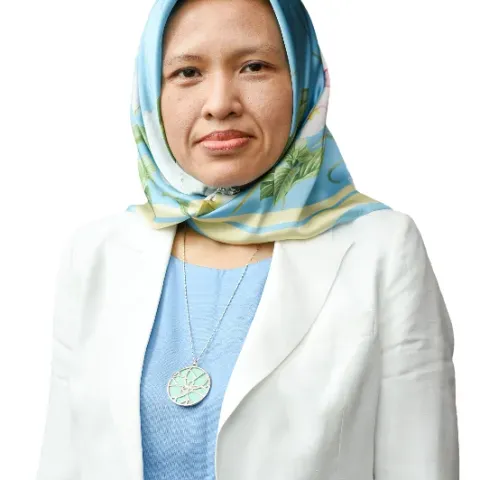
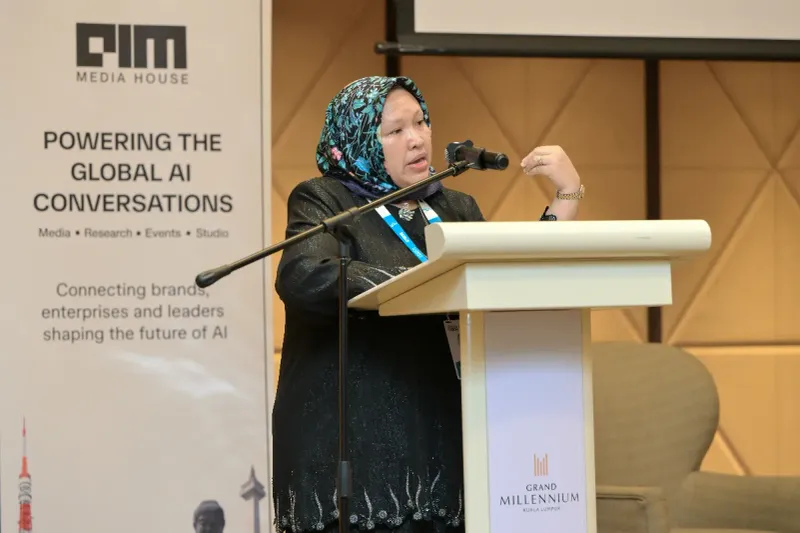
Datin Dr. Ts. Habsah Nordin opened her keynote at CDO Vision Kuala Lumpur with a light admission: for once, she was neither presenting slides nor sitting on a panel. What followed was less a technology briefing than a reflection on leadership, drawn from more than three decades spent across strategy, governance, data and artificial intelligence.

The keynote shared its title with her recently published book, AI Mind, Human Soul. She described herself as an "author by accident", someone who never planned to write but felt compelled to. Her central conclusion was simple and pointed: technology evolves exponentially, and leadership and organisational behaviour must evolve just as quickly. That gap, she said, is the defining challenge of the AI era.
Purpose before capability
Dr. Habsah anchored her argument in a familiar story. When President John F. Kennedy committed America to putting a man on the moon, NASA did not yet have the technology to do it. What existed first was belief. Purpose aligned leadership, leadership mobilised people, people built capability, and capability changed history.
The same sequence, she argued, applies to organisations today. "Transformation does not begin with AI. It begins with leadership."
Partner with The CIO Room
Reach the leaders this piece is about
Four or five partners per room, alongside 50–100 CIOs and enterprise AI leaders. Tell us who you want to meet.
She pointed to McKinsey's State of AI research, which shows that while adoption is now widespread, most organisations still struggle to turn AI into enterprise-wide business value. The technology works, she said. The differentiators are leadership, governance, operating-model redesign and organisational readiness.
Lessons from Petronas: trust must precede scale
Those conclusions come from direct experience. When Dr. Habsah established the enterprise data centre of excellence at Petronas, the hardest problem was never technical. It was building a common language across more than 250 companies so they could govern, share and trust data as a strategic asset, and doing so during the COVID period. Two of her former team members were in the room as award recipients, a detail she noted with evident pride.
That effort succeeded, she said, because leadership, governance and culture were aligned before anyone expected technology to scale. When she later set up Petronas's AI centre of excellence, the first priority was not deploying models. It was institutionalising responsible AI, strengthening AI literacy and putting governance in place so that AI could be trusted across the enterprise.
The lesson she drew was a clear order of operations: trust first, then scale, then value. "If you want your organisation to use AI, they must trust your AI first."
The new mandate for data and AI leaders
This shift, she argued, has fundamentally changed the role of chief data, digital and AI officers. They are no longer custodians of data but architects of enterprise intelligence, accountable not only for data quality and implementation but for organisational trust, ethical stewardship, business value and board confidence.
The question facing the room, in her framing, is no longer whether AI can be implemented. It is whether intelligence can be governed responsibly while producing measurable business outcomes.
People don't resist technology. They resist uncertainty
The most resonant section of the keynote addressed the human side of change. In her experience, people do not resist technology; they resist uncertainty. They want to know where they fit in the organisation of the future. That is why psychological safety, continuous learning and leadership communication have become strategic capabilities rather than soft extras.
She summarised the dynamic in a sequence: technology may automate work, but leadership creates confidence, purpose creates commitment and trust creates adoption.
Looking ahead, she argued that competitive advantage will not go to organisations with the most sophisticated AI, since anyone can buy the tools. It will go to those that learn faster than the pace of technological change.
In the Q&A, she returned to NASA to sharpen the point. Asked what drove her to write the book, she said conferences tend to recycle predictable stories about governance and technology capability, while too few explore how leaders become architects of change. The fear that AI will replace people, she noted, already creates a quiet resistance inside organisations, and leaders must learn to read those signals. She recalled the well-known story of a NASA janitor who, asked about his job, replied that he was helping send a man to the moon. Her challenge to the audience: does your AI purpose reach your people in the same way, or is it simply a promise of a 20% revenue uplift that means little to someone on the shop floor, in the call centre, in sales or in operations? A board can discuss P&L impact; employees need to hear how AI makes them more capable.
The book itself, she added, took six months of full-time writing after she left Petronas, though the ideas had been forming long before.
On "token maxing" and the technology-first trap
A journalist in the audience raised a timely issue: developers at large technology companies being pushed to maximise token usage through internal leaderboards, and the growing backlash over cost. Dr. Habsah was blunt, suggesting the narrative primarily benefits a single party, and stopped short of calling it a scam.
The more important question, she said, is whether organisations are looking at their whole ecosystem of change. Too many fall into what she called the technology-first trap: buy a tool, then look for problems it can solve. Real transformation means building new organisational capabilities, from leaner processes and happier customers to entirely new products and businesses.
Her practical sequence was straightforward. Fix your data and resolve technology fragmentation first. Build proofs of concept with the business in mind. When it is time to scale, treat it as a distinct investment decision with a clear exit strategy: kill, pivot or transform. Design for security and ethical behaviour, invest in change management, especially when deploying to customers, and keep reviewing systems after launch. "You can't see AI as a project. You have to see AI as transformation."
In banking especially, she noted, switching costs are near zero and banks now compete with e-wallets and fintechs
- Just each other
A national marketplace for AI
The final question came from an audience member working with her on U Mobile's Enterprise Innovation Platform (EIP), where she serves as a panel advisor. She explained her involvement as a response to a gap she sees in Malaysia: large organisations have the resources to pursue AI, while micro, small and medium enterprises risk being left behind.
She described the EIP as a neutral platform where organisations of any size can build AI products and potentially commercialise them, creating something closer to an AI marketplace for Malaysia. That would speed up outcomes, reduce duplicated effort and lessen dependence on hyperscalers, while drawing on local understanding of Malaysian businesses and their nuances. It echoed an idea she had at Petronas, where many business units built their own solutions in parallel. She urged partners to extend incubation beyond companies to individuals, many of whom are unaware of the opportunities available to them.
That reflects a theme from her book: a world of intelligence built through collaboration rather than competition.
The takeaway
Dr. Habsah also used the platform to invite attendees to the DAMA Malaysia chapter's upcoming programme, in her capacity as chapter president, with a speaker from DAMA International focused on the data practices needed to scale AI. She mentioned that signed copies of her book, which she has deliberately kept out of mainstream bookstores, have already reached readers in Singapore, Sydney, Indonesia and Abu Dhabi.
But the message that lingered was her closing reflection. NASA did not inspire the world because it built rockets; it inspired the world because it united people behind a shared purpose. For data, digital and AI leaders, the responsibility is similar: not merely to build AI or govern data, but to shape organisations where intelligence is guided by trust, purpose and leadership.
Behind every algorithm, she reminded the audience, is a decision. Behind every decision is a human being. And behind every successful transformation, there must remain a human soul.
CIO summit Singapore · CIO summit Sydney · Compare this with our AI conference for CIOs.