Contents
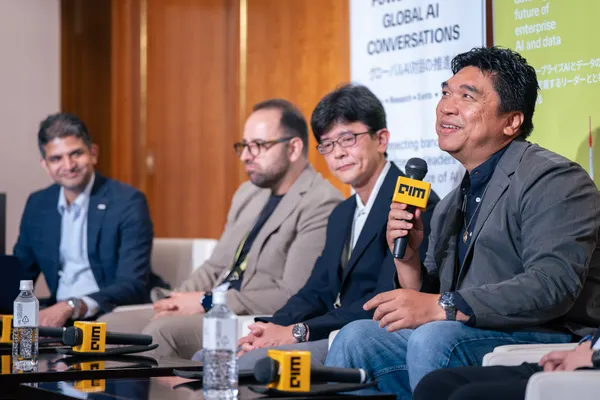
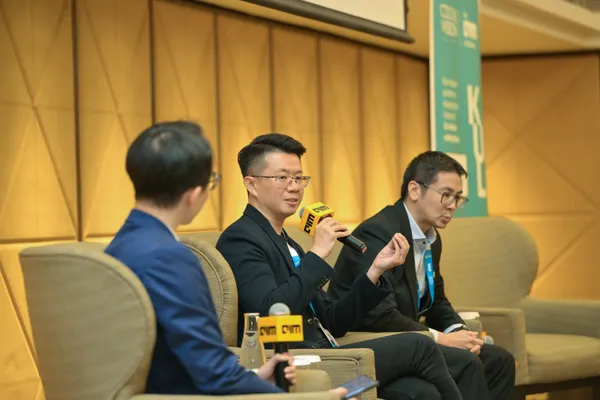
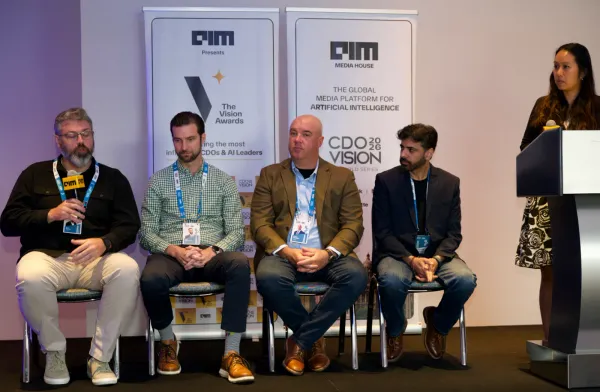
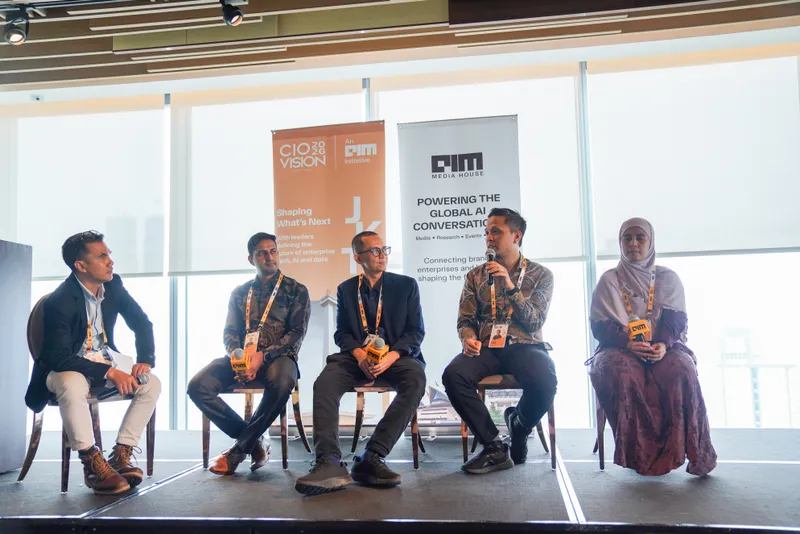
Leaders from Telkomsel, Kumparan, Dentsu Indonesia, Hukumonline and Carsurin share what it actually took to turn AI from experiment into business value, at The CIO Room Jakarta.
Almost every company is using AI now. Far fewer can show it on the balance sheet.

Adi Rahman
Director of Carsurin Academy & Lead – Enterprise Transformation & AI Innovation, PT Carsurin Tbk
Ihsan Fauzi
Head of Enterprise AI & Data Solutions, Telkomsel
Ferdian Robianto
Chief Technology Officer, kumparan
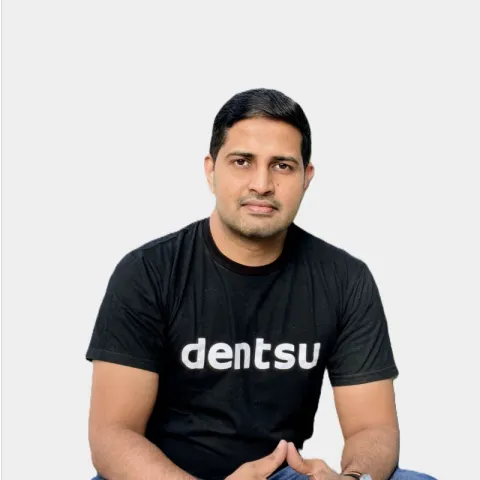
Ehetesham Abbas
Head of Digital Solutions & Transformation, dentsu IndonesiaThat gap framed the conversation from the first minute. Moderator Adi Rahman, Director of Carsurin Academy and Lead for Enterprise Transformation & AI Innovation at PT Carsurin Tbk, opened with two numbers: close to nine in ten organisations were using AI regularly by late 2025, yet according to McKinsey only 39% reported any enterprise-level impact on earnings. "There's a lot going on with AI: the training, the videos, the articles," he said. "But it's best we hear directly from those who have already been through the journey."
What followed was not a debate about models or vendors. It was four practitioners, from telecom, digital media, advertising and legal tech, explaining how they moved AI out of the pilot stage and into production, and what they had to get right along the way.
Partner with The CIO Room
Reach the leaders this piece is about
Four or five partners per room, alongside 50–100 CIOs and enterprise AI leaders. Tell us who you want to meet.
Prove it at home before you sell it
For Ihsan Fauzi, Head of Enterprise AI & Data Solutions at Telkomsel, AI value has a double test. His team takes the AI and data solutions that work inside Telkomsel and packages them for enterprise clients. So the first question is always whether a solution has genuinely delivered value internally.
The second question is sharper. "Is the problem our AI solution is solving a generic problem, or is it specific to Telkomsel? If it's specific, there's no point bringing it to market."
Telkomsel's edge, he argued, comes from scale few others can match: roughly a trillion transactions processed a day, and around 250 terabytes generated daily from a single internet payload alone, plus data assets that only other telcos could rival.
His showcase was Selina, an AI tool that automates root-cause analysis for IT operations. Previously, when something broke, engineers pulled logs from servers and databases by hand. Worse, because nobody knew which part of the stack had failed, everyone got called. "Sometimes we'd have to call everyone at 3 a.m., ask everyone to check, and have everyone present their findings before we found the issue."
Selina cut mean time to resolution from hours to minutes and sharply reduced those all-hands night calls. And because every enterprise with a complex IT estate faces the same problem, Telkomsel now offers it externally, where Fauzi says it is gaining good traction.
A problem only your company has is a cost saving
- A product
Slow down to ship safely
Ferdian Robianto, CTO of Kumparan, one of Indonesia's largest online media platforms with traffic approaching a billion a month, described an AI journey that is now nearly a decade long, built in layers.
Classic machine learning has run since 2017, powering personalised feeds and article scoring behind the scenes. Deep learning followed, aimed at the newsroom: most of Kumparan's staff are journalists working in the field, not at keyboards, so the team built tools that turn a recorded interview into text and into a published story, with a target of around five minutes.
The generative AI chapter is the most instructive, because of how long it took. Kumparan began work on LLM-powered article summaries two years ago, yet only recently released them. The reason was hallucination. In early internal tests, the model kept naming Jokowi as Indonesia's president, long after Prabowo had taken office. "This is a very simple thing," Robianto noted, but in news, simple errors destroy trust.
So the rollout was staged: 10% of users, then 20%, then more, with every hallucination sending the team back to the start. The motivation was clear. Readers increasingly consume news through TikTok, Instagram and Facebook, and their reading habits look nothing like they did five years ago. Summaries meet them where they are.
On the operations side, Kumparan built an internal portal on the open-source AnythingLLM platform. Employees can query Claude, ChatGPT and Gemini side by side, alongside an in-house inference model that handles data that must never leave the building: revenue, page views, impressions and engagement. Launched about three months ago, it has already cut AI costs by close to 50%.
The takeaway: in high-trust businesses, release speed is not the metric. A controlled rollout with a fast rollback is what makes GenAI shippable.
Better answers, not just faster ones
Ehetesham Abbas, Head of Digital Solutions & Transformation at dentsu Indonesia, was explicit that efficiency alone is not the goal. "It's not just about making the same work faster. It's about how we connect AI to our people, embed it into our workflows, and create growth opportunities for our clients."
His example was audience intelligence. Dentsu has built CoPo, short for "Consumer in your Pocket". Any general-purpose AI model can describe an audience persona from public data. CoPo starts somewhere else: dentsu's proprietary panel data, covering the Indonesian population with thousands of attributes on motivation, behaviour, interests and media habits.
CoPo turns that into a conversational persona. Strategists can ask it what motivates an audience, why it picks one brand over another, how it might receive a new product, or how it would react to a new message. The result is a stronger foundation for decisions on brand strategy, media and creative.
The takeaway: the moat isn't the model. It's the proprietary data you ground it in.
When competitors validate your bet
Poetri Heriningtyas, Head of Data at Hukumonline.com, oversees the company's full data stack, from analytics and engineering to data science and AI. Hukumonline has spent 26 years building Indonesia's go-to legal information platform: a regulation database, legal news, in-depth analysis of new policy, a legal clinic connecting the public with legal experts, and a Regulatory Compliance System that helps companies keep internal policies aligned with government regulation.
The company already used traditional machine learning for search and churn prediction. When the generative AI wave arrived at the end of 2023, the team saw a chance to build something new: an AI legal assistant. But confidence was low at first. Law is subjective, heavily dependent on language, context and human judgement.
That hesitation, Heriningtyas said, turned out to be pointless. AI has accelerated so quickly that, helped by vibe coding, many new legal-tech players are now building similar products. More competition is the downside. The upside is validation: the bet was right. And against a crowded field, Hukumonline's 26-year collection of legal data remains its strongest differentiator, which the team keeps building on with new research, features and products for legal professionals.
The takeaway: a flood of competitors is a signal
- A threat, if you own the data they can't easily replicate
People are the enabler
Rahman closed the loop with his own experience at Carsurin, a testing, inspection and certification company. In sales, AI has transformed how quickly the team produces customised quotations and pitch books. Operations is harder. Carsurin works across branches from Sumatra to Kendari, and Rahman recently travelled eight hours beyond Kendari to Konawe. There, the challenge is not software but shifting the mindset and habits of frontline, blue-collar workers, and helping local staff compete with talent arriving from Makassar and Java.
His view is simple: "AI is the tool, but at Carsurin we believe people are the enabler."
What CIOs can take from this
01Across four very different industries, the same patterns kept recurring:
- Start where the pain is real. Night-time incident calls, slow field reporting, shallow audience insight: each success began with a concrete operational problem.
- Proprietary data is the differentiator. Telkomsel's transaction scale, Dentsu's panel data and Hukumonline's legal archive are what make their AI hard to copy.
- Govern for trust before you scale. Kumparan's staged rollout and in-house inference for sensitive data show that safety and cost control go hand in hand.
- Build AI into the operating model. Value came from embedding AI into workflows, and from investing in the people who use it.
Join the conversation
The CIO Room brings together the technology and data leaders who are making these decisions inside their organisations, in closed-door sessions built for candid exchange rather than vendor pitches.
- CIOs and technology leaders: request an invitation to an upcoming CIO Room in your city.
- Solution providers: put your brand in front of the decision-makers shaping enterprise AI budgets. Explore partnership opportunities.
Explore the upcoming calendar and speaker line-ups at thecioroom.com.
CIO summit Jakarta · Compare this with our AI conference for CIOs.