Contents
Four technology leaders from streaming, lending, retail and telecoms explain why AI value shows up in process, P&L and people, and almost never in token counts.
Boards have stopped asking whether AI works. They now ask when it pays. That question drove a candid panel at The CIO Room, titled "Beyond the Business Case: When AI Investment Actually Pays Off."

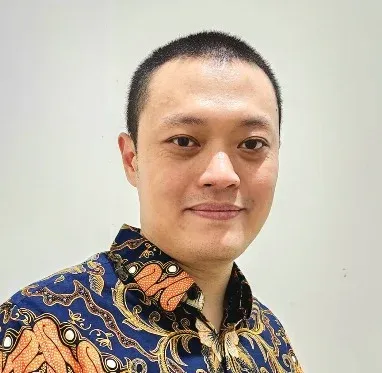
Yulhendra Yulhendra
Head of Data, Analytics and AI/ML, PT Link Net Tbk
Hendyanto Cheng
VP of Engineering, Vidio
Vincent Handara
Head of Data Science, PT.Mega Finance
Varuna De Wass Gunaward
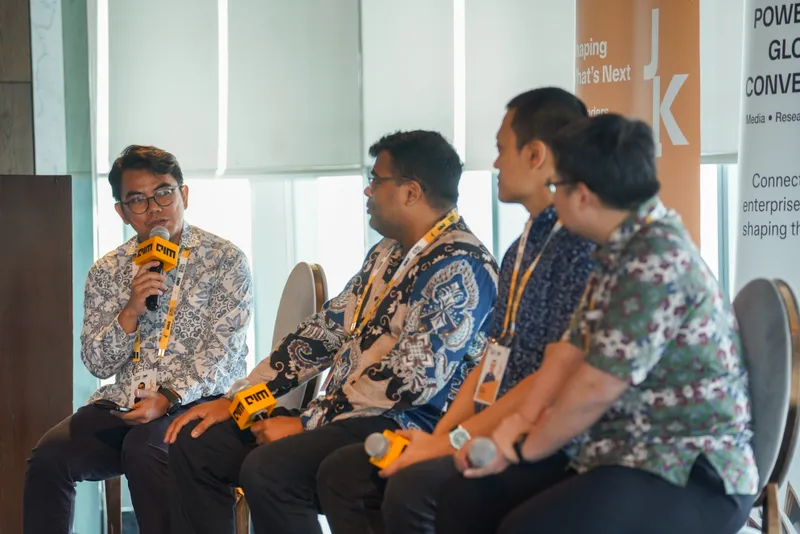
Head of IT, PT Agrinesia RayaThe session was moderated by Yulhendra Yulhendra, Head of Data, Analytics and AI/ML at PT Link Net Tbk. He was joined by Hendyanto Cheng, VP of Engineering at Vidio; Vincent Handara, Head of Data Science at PT Mega Finance; and Varuna De Wass Gunaward, Head of IT at PT Agrinesia Raya.
Yulhendra set the ground rules early. The panel would not debate what AI can do. It would examine how AI turns into measurable business value, and what leaders do when it doesn't.
Partner with The CIO Room
Reach the leaders this piece is about
Four or five partners per room, alongside 50–100 CIOs and enterprise AI leaders. Tell us who you want to meet.
Stop counting tokens, start counting outcomes
Asked to name the most common mistake enterprises make when measuring AI ROI, the panel converged quickly. Usage is not value.
Varuna put it plainly: don't measure how much AI is being used or how many tokens are consumed. Measure the business outcome the company actually gets.
Vincent warned against a different trap: chasing a direct, nominal return on investment. In lending, he said, the better questions are about process. Can AI reduce risk significantly? Can it surface higher-quality customers? "Good things will come if we focus on process," he said.
Hendyanto added a statistical caution. A change has to be large enough to matter. If the movement is small, or could simply be random, the work is not done yet.
The payoffs nobody planned for
Some of the strongest returns came from places the business case never predicted.
At Vidio, Hendyanto's surprise was engineering work that had always been "good in theory." Large-scale refactoring, where every file has to change at once, was long considered too costly in engineering time. With AI, the team could finally do it.
Varuna offered two quick wins from retail. With more than 500 stores and constant hiring, his team built an AI-driven CV screening tool using open-source tooling and purchased tokens. It took about a week to develop and made a significant difference to recruitment. He recommended it as a first project for any organisation new to AI.
His second example was bigger. The company had been evaluating an external SaaS product priced at about IDR 6 billion. Instead, one developer using vibe coding built an in-house solution covering the same requirements in under six months. Asked whether this would shape the 2027 budget, Varuna confirmed it already had, through developer vacancies.
For Vincent at Mega Finance, the unexpected payoff came from debt collection. His machine learning engine separated good customers from risky ones. Good customers pay on their own, so collection staff could be pulled back from them. Accumulated over a year, that manpower saving became a significant profit contribution.
Vincent also made a case for traditional machine learning. It is not perfect, he admitted, but its value is concrete and explainable.
The churn model that changed nothing
The most instructive story of the session was a failure, and the model itself worked fine.
Vidio is a subscription business, so retention is everything. Hendyanto's team built a churn prediction model that combined watch history, purchase history, user profile data and content availability. It could reliably flag which users would not renew next month, and even anticipate drops when a league such as the EPL went on pause.
The problem came after the prediction. Knowing a user would leave did not tell the team what to do about it, and nothing they tried moved the number. "The dashboard looks very pretty," Hendyanto said, and it was screenshotted for stakeholders every week. But on the business side, nothing changed.
The lesson: an accurate model without a proven intervention is a reporting tool
- An investment that pays
Knowing when a pilot is ready for production
The panel offered two practical tests.
Vincent's test is backtesting on recent operational data. Models are trained on one or two years of history, but past performance does not guarantee future results. Before deployment, he re-tests the model against the most recent one or two months of data. If the error holds steady and the output still answers the business question, it ships. If not, he pauses the project, runs a root cause analysis and iterates.
Hendyanto's test is disciplined A/B testing. Vidio constantly experiments with its recommender system, adjusting signals such as watch history and content similarity. A lift in click-through rate is not enough on its own, because some of it is noise. The team waits until the gap is large enough to rule out randomness before promoting anything to production.
Speaking the CFO's language
How should technology leaders pitch AI to a CFO? Varuna admitted he once made the same mistake many IT leaders make: leading with user counts, token usage and feature lists.
Senior leadership thinks in four terms, he argued: revenue, cost, working capital and risk. Every AI proposal should show which of these it moves.
01His current demand forecasting project in retail touches all four:
- Revenue rises as out-of-stock incidents fall.
- Cost drops as wastage is reduced.
- Working capital improves because the business stops holding unnecessary inventory.
- Risk falls, since empty shelves also damage the brand's reputation.
Yulhendra agreed and shared Link Net's own low-hanging fruit. As a B2B business, Link Net bills from contracts that can run to around 150 pages, previously reviewed by hand. Using AI to extract billing rules from those contracts, the company identified roughly IDR 4 to 5 billion in revenue leakage in its first quarter. His advice: start with a use case tied directly to revenue or cost.
When a pilot underdelivers, check the scope
Before stopping a disappointing pilot, Vincent argued, ask whether the scope was simply too narrow.
He described a retention marketing engine that enabled near-instant approvals for existing customers. Conversion rates rose three to four times. Yet management asked why sales volume stayed flat. The answer was that the pool of existing customers was small. However well the model converted, the total impact could not register with leadership.
The fix was not to kill the project but to widen it. Vincent proposed applying AI across the full customer journey, starting with new customer acquisition. As new volume grows, the proven retention model has more customers to work on, and the combined result becomes visible at board level.
Freed-up hours are not savings until they are redeployed
What if the AI works but the P&L doesn't move? Varuna returned to his CV screening example to answer.
The tool saved the recruitment team a large amount of time. But if that team simply sits idle, the company is now paying for tokens and servers with no business outcome. Costs have actually gone up.
The value only arrives when leaders plan where the freed capacity goes. At Agrinesia Raya, the company will not need to expand the recruitment team as it opens more stores. Some recruiters have also taken on shared work across other HR functions. That redeployment is what turns a manpower saving into real P&L impact.
If the board cut the AI budget in half
Yulhendra closed with a scenario every leader in the room recognised from budget season: the board wants AI spending cut by 40 to 50 percent. What survives?
Hendyanto: keep what has numbers. The recommender system and search stay, because Vidio has clear before-and-after evidence. He would also defend AI support for on-call engineers. Its value is harder to measure, but faster incident resolution keeps transactions flowing. Nice-to-haves go first. A customer service chatbot, for example, could revert to a better knowledge base and search, without inference.
Vincent: protect sales and risk. In multifinance, where non-performing loans are squeezing the sector, he would keep retention, new customer acquisition and cross-selling, along with fraud detection and risk profiling. Generative AI chatbots would be cut. To him they remain a black box with limited explainability, and his priority is understanding why customers behave as they do. Fancier projects can return once finances stabilise.
Varuna: negotiate before you cut. His first move would be a conversation with AI and cloud vendors, whom he treats as partners, to seek a better deal. Next, he would test lower-cost token and server providers from the US, China and increasingly Indonesia, moving lower-priority workloads there. Only then would he prioritise initiatives. Anything already embedded in workflows and generating value stays, because cutting it would cost more elsewhere. Low-impact trials go first.
Varuna also refuses to make the call alone. He documents the business impact of each proposed cut and lets management decide with full information. Dropping CV screening, for instance, could mean HR overtime now that recruiters have been redeployed.
The takeaway: AI is a business transformation problem
Yulhendra summed up the session in one line of argument. AI is not primarily a technology challenge. It is a business transformation challenge.
Real returns come when trusted data governance, clear business ownership and AI capability work together. Organisations that build those foundations create lasting value. Those that focus only on the technology, he warned, will keep chasing pilots without ever seeing enterprise impact.
Join the conversation at The CIO Room
This discussion is one of many closed-door conversations hosted by The CIO Room, where senior technology, data and AI leaders share what is actually working inside their enterprises.
For CIOs and technology leaders: explore upcoming CIO Room sessions and request your invitation at thecioroom.com.
For solution providers: The CIO Room offers sponsors direct access to the decision-makers shaping enterprise AI budgets. Get in touch to explore partnership opportunities.
Meet the panelists: Yulhendra Yulhendra · Hendyanto Cheng · Vincent Handara · Varuna De Wass Gunaward
Compare this with our AI conference for CIOs.