Field notes from the rooms where enterprise AI gets decidedNext room: Singapore & New York · 13 Nov 2026
CDO summit · The CIO Room · 2026
CDO Summit 2026
A CDO summit is a concentrated opportunity to step back from the daily delivery queue and examine the data-leadership decisions that shape an enterprise. The Chief Data Officer remit centres on data foundations and governance: who owns critical information, how quality is measured, which controls become working practice and whether the data estate can support the AI ambitions the business has already announced.
“Great conversations and really interesting use cases, that’s what stood out at CDO Vision. The best part of it all is the human interaction. It’s about not being isolated nodes, it’s about building”
Jesús Barrasa
AI Field CTO · Neo4j · New York
“Many thanks, it was a great, informative and amazing gathering. Hearing different perspectives and making some great connections. Glad I was able to attend and looking forward to future events.”
Charles Wiggins
Vice President Tecnology / CIO · American Marketing Association
“Enjoyed the event . Thx for inviting me.”
François Millard
Chief Data Scientist · Vitality Global
“Being part of CDO Vision 2026 is an opportunity to step out of your own bubble and learn what’s actually working and what’s not. It’s a space where senior leaders are learning together, sharing real”
EJ Kim
Global Managing Director, TRUE Global Intelligence · FleishmanHillard · New York
“Thank you for being so persistent in getting me to join CDO Vision. It was a GREAT event. Many meaningful interactions and insightful discussions. Thank you again!”
Kenneth Longo
Vice President, Discovery Data Science · Wave Life Sciences
“Thanks to the AIM team for organizing a nice event, I enjoyed being there.”
A
Ashish Singru
Executive Adviser - Data & Analytics Strategy · Barracuda
“It was a very great experience meeting all the data leaders. Thank you to everyone who organized the event and invited me to attend.”
S
Subramanian Chidambaram
Sr. Director, Data & Enterprise Apps · Molekule
“It was a great time; thank you for the time and effort in coordinating the event! Definitely got some solid takeaways and new relationships!”
Sean Maccarthy
VP of Analytics · Good Sam
“Thanks for inviting. I would love to attend more and become part of panelist path forward.”
Nirav Parikh
Head of Enterprise Strategy, Architecture and Technology for Data and AI · Mass General Brigham Hospitals
“Just wanted to reach out and say thank you to the team.
Great event, I am very glad I participated.”
Matthew Marino
Vice President, Head of Operations- Employee Benefits · ShelterPoint
“Thanks to AIM for organizing a great event and thanks for having me join.
Had a great time. Look forward to staying in touch.”
Rajesh Ramaswamy
Senior Vice President (SVP), Head of Machine Learning and AI Strategy · Sail Biomedicines
“Excellent work on the program management for CDO Vision Dallas-Fort Worth. I had a wonderful time sharing the stage with fellow leaders on the panel, gaining insights from the keynote and panel”
Karthikeyan Ilangovan
Vice President - Data, Analytics and AI/ML · MODE Global
“It’s wonderful being here. It’s so great to hear from leaders across organizations of all shapes and sizes. There’s a level of comfort in understanding that others are going through this really”
Josie Reinhardt
Enterprise Account Executive · Hex Tech · New York
“CDO Vision 2026 has been an upgraded experience for us—with better participants, stronger conversations, and real opportunities to engage with prospective customers. It’s a space where we not only”
Rajaraman Srinivasan
Founder and CEO · Neoware Technology Solutions · New York
“Thank you all for a great event. I'd love to be considered for future events as it felt very aligned with my knowledge and experience. Thank you!”
The CIO Room provides the executive setting in which those questions are discussed alongside CIOs and enterprise AI leaders — because a data decision rarely stays inside the data team.
This page is a guide to the summit from the data leader’s seat. It covers how to use a room of peers to test an operating model, why governance discussions are more useful when they include the people who fund and build on your foundations, and how to leave with sharper reasoning rather than a longer reading list. The city grid below is drawn from the live 2026–2027 calendar, and every edition links to its own agenda, attendee list and invitation details. If you are comparing CDO summits, start with the data decision you need to defend this year — then find the room where peers are working through the same one.
Every enterprise AI programme eventually meets the data estate it depends on. A CDO summit is where leaders compare what that meeting looked like: which quality problems surfaced first, how ownership of critical data elements was assigned, and what it cost to make information reliable enough for production use. These conversations are most valuable before a commitment is made, when a peer’s experience can still change the shape of an investment.
Foundations are organisational as much as technical. A central data team can provide consistency but become a bottleneck; distributed ownership can improve proximity to the business but create uneven practices. Summit discussion helps leaders compare the conditions under which each arrangement works — the responsibilities, incentives and skills that determine whether a model succeeds in your organisation rather than in someone else’s case study.
Governance becomes real when a policy turns into a control someone operates: who approves sensitive-data access, what happens when a source changes, and how acceptable use is documented and enforced. Generative AI raises the stakes by making data available through new interfaces. A CDO summit gives leaders a setting to compare how those controls were implemented — not to copy another company’s policy, but to understand the trade-offs behind it and identify which assumptions would need to change at home.
The mixed executive room helps here. CIOs can explain the architectural and operational implications of a governance decision, while AI leaders describe what deployed systems actually demand of the data estate. Changing ownership or access affects an application roadmap, a control framework and a business unit’s ability to use an AI service — and those dependencies are easier to see when all three perspectives are in the room.
A practical summit objective might be to improve a governance proposal, clarify the scope of a data platform investment or compare ways of demonstrating value to the board. State the decision and the uncertainty before the event. During discussions, listen for the constraints behind a peer’s answer: business structure, regulation, available skills and the maturity of existing systems. Two organisations can reach different conclusions for sound reasons. Understanding those reasons is more useful than collecting isolated recommendations.
After the summit, translate insights into a short set of actions your own team can evaluate. That may mean revising decision rights, creating a quality baseline or testing a narrower AI use case before expanding it. The summit provides perspectives, not a finished implementation plan or a guaranteed commercial outcome. Its distinct value for a CDO is the chance to interrogate data strategy in a wider executive context, then return with sharper reasoning about how data responsibilities support enterprise goals.
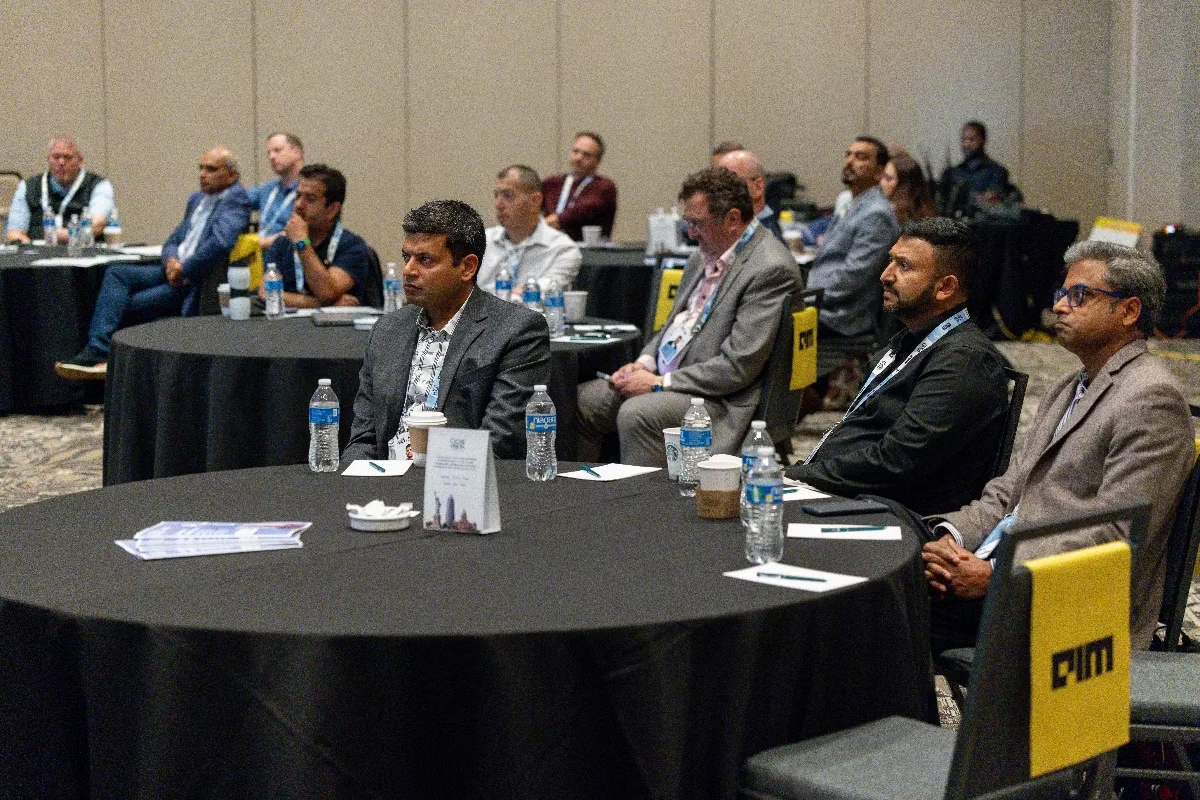
The CIO Room brings together 50–100 leaders per room for in-person conversations about enterprise technology, data and AI. The purpose of that format is to make peer exchange possible: participants can ask follow-up questions, compare the constraints behind a decision and hear more than a polished presentation. The series is produced by AIM Media House. Each edition has its own event page, where the published agenda, venue information, current attendees and partner details provide a more useful picture than a generic conference promise. Session formats and timings should always be checked against that edition’s programme.
A smaller gathering is not a substitute for every kind of conference. A developer looking for hands-on training, a researcher presenting a paper and an executive reviewing an enterprise operating model have different needs. These pages focus on the executive use case: discussing decisions with people who carry responsibility for implementation. Review the event’s topics before requesting an invitation, and arrive with a question grounded in your organisation’s work rather than an expectation that one agenda will cover the entire AI market.
The series spans 20+ global cities across 2026 and 2027. The upcoming city-event grid on this page is drawn from the live calendar, not a fixed list of assumed destinations. Every listed edition links to its own date, location and event information. This matters when comparing travel plans: two editions in different years or cities can have different attendees, topics and practical arrangements. Use the full calendar to compare options, then open the specific event page before committing to a journey.
Past editions add context that a forthcoming agenda cannot supply. Event galleries show the room, panels and networking, while past highlights and Insights offer material from earlier gatherings. Every past edition retains the exact name it ran under; editions dated today or later use The CIO Room. The change in series name does not erase the previous programme or its participants. Review those records as evidence of the series’ history, not as a guarantee that a particular company or individual will attend a future edition.
Choose the city edition that suits your responsibilities and open its event page. Where Request Invite is available, the internal form asks for professional information, including your organisation, designation and phone number, so the team can understand your role and contact you. Complete the requested details accurately and use the event-specific form rather than assuming an invitation applies to every city. Submitting a request expresses interest; it is not the same as an approved place or a completed ticket purchase.
The organising team reviews requests and follows up about participation. Check the selected event page for any ticket options, deadlines or attendance conditions rather than relying on a blanket price or approval-time claim. If you are considering a commercial partnership, use Partner with us or contact the team at [email protected]. Attending and partnering are different conversations. For a useful invitation request, explain the area you lead and the enterprise data, technology or AI decisions you are working through.
Questions
Chief Data Officers and senior data and analytics executives, alongside CIOs and enterprise AI leaders whose programmes depend on shared data foundations. Each event page publishes its current attendee list so you can assess the room before requesting an invitation.
 09:00
 09:40
 10:00
 10:30
 13:30
 16:00


